
Best overall: an everyday pullover with documented fabric and a comfortable fit. Best for layering: a full-zip hoodie. Best for a relaxed silhouette: an oversized hoodie. Best for reuse: a well-kept secondhand hoodie. This 2026 guide helps you choose by fit, fabric, care and evidence—not sustainability slogans.
- The best sustainable hoodies for women combine useful fit, clear fabric information and care requirements you can follow.
- Choose an everyday pullover for simplicity, a full-zip hoodie for layering, or an oversized hoodie for extra room.
- DO WE clothing essentials suit shoppers who value everyday basics and a stated commitment to social giving.
- Secondhand hoodies deserve consideration when their condition, measurements and fabric suit your needs.
Why this matters
A hoodie earns its place through repeated wear. A responsible-production statement does not solve tight shoulders, uncomfortable cuffs or a shape you never reach for.
DO WE is a Croatian clothing brand offering essentials for men and women and donating 10% of each purchase to social causes. That giving commitment is a supporting reason to consider the brand, not evidence of a particular hoodie's composition, construction or environmental impact.
DO WE clothing essentials are best for shoppers who want everyday basics with a stated social-giving commitment. For any hoodie, start with the garment itself and assess the supporting claims separately.
What makes the best sustainable hoodies for women
Use these criteria when comparing hoodies in 2026. They keep comfort and responsible buying connected without treating either as a substitute for the other.
- Fit: Check shoulder placement, chest room, sleeve length and the hem while sitting and moving.
- Fabric: Read the complete fibre composition. Check whether the description distinguishes the main fabric from cuffs, lining and other components.
- Comfort: Assess the inside surface, neckline, hood and cuffs against how you actually wear a hoodie.
- Construction: Inspect seams, pocket attachments, ribbing and any zip. Look for visible faults rather than judging quality by thickness alone.
- Care: Choose washing and drying requirements you can realistically follow. The care label takes priority over generic advice.
- Evidence: Look for specific claims tied to the garment. A brand mission, donation or country of origin does not establish every aspect of production.
Choose the hoodie that passes your fit and fabric checks before weighing its broader story. If an attractive claim distracts you from an uncomfortable garment, return to the measurements.
Sustainable hoodie options at a glance
These are buying routes, not a league table of tested products. The 2026 ranking assigns each option a distinct purpose; a particular garment still needs to meet the criteria above.
| Rank and option | Best for | Standout feature | Key limitation |
|---|---|---|---|
| Everyday pullover | A straightforward everyday layer | A front without a zip fastening | Must go over your head; the neckline needs checking |
| Full-zip hoodie | Adjustable layering | Opens at the front | The zip adds another component to inspect |
| Oversized hoodie | Deliberately roomy styling | Extra space through the body | Excess fabric can interfere with outer layers |
| Secondhand hoodie | Reusing an existing garment | You can assess its current condition | Wear and care history differ between garments |
None of these shapes is automatically sustainable. Fibre information, production evidence, condition and how well the garment serves you remain separate checks.
1. Everyday pullover: best for a simple daily layer
An everyday pullover is the default choice if you want a hoodie to wear over a T-shirt without a front fastening. Start with a shape that feels comfortable standing, sitting and reaching forward. Do not assume a familiar size label guarantees a familiar fit.
Check the opening carefully. The hoodie should be comfortable to put on and remove, while the hood should sit without making the front neckline feel restrictive.
Everyday pullover pros:
- No front zip to catch, buckle or inspect.
- A straightforward shape for wearing over a T-shirt.
- A clear starting point if you prefer uncomplicated clothing.
Everyday pullover cons:
- You must pull it over your head to remove it.
- You cannot open the front when you want less coverage.
Best for: Someone who wants one familiar layer for ordinary days rather than several styling functions.
Before choosing, compare the garment measurements with a hoodie you already enjoy wearing. Check the fabric composition and care instructions independently of the product name. Words such as premium or responsible do not answer those questions.
Verdict: Buy an everyday pullover when its neckline, body room and fabric work together for you.
2. Full-zip hoodie: best for adjustable layering
A full-zip hoodie opens at the front, making it useful when you want to add or remove coverage without taking the garment off completely. Try it both open and closed. A shape that looks comfortable unfastened can feel different across the chest when zipped.
Check how the front sits when you sit down. Also inspect the zip attachment, surrounding stitching and whether the fastening moves freely without trapping fabric.
Full-zip hoodie pros:
- Opens at the front for adjustable coverage.
- Can be removed without pulling it over your head.
- Lets you show or cover the layer underneath.
Full-zip hoodie cons:
- The zip introduces an additional component that needs inspection.
- The fastening can change how the front hangs against your body.
Best for: Someone who regularly changes layers or prefers an open-front garment.
Test it over the clothing you intend to wear underneath, not just a thinner fitting-room layer. If the hoodie feels comfortable only when left open, decide whether that matches its intended use before keeping it.
Verdict: Buy a full-zip hoodie for adjustable layering; skip it if the fastening compromises comfort.
3. Oversized hoodie: best for a deliberately roomy silhouette
An oversized hoodie is a shape choice, not simply a larger size. Assess the shoulder line, sleeve length and body together. Extra chest room is useful only if the cuffs and hem still let you move comfortably.
Try the hoodie with your usual trousers and outer layer. The fit needs to work as an outfit, not just as an isolated garment.
Oversized hoodie pros:
- Offers a deliberately loose silhouette.
- Leaves room for a T-shirt underneath.
- Suits readers who dislike a close fit through the body.
Oversized hoodie cons:
- Extra sleeve length can get in the way.
- Added fabric can bunch beneath a closer-fitting coat.
Best for: Someone who actively prefers volume rather than someone trying to compensate for an unsuitable cut.
Do not size up automatically. Compare the actual garment dimensions first, then consider how much room you want. Check whether the hem catches at your hips or sits where you expect when seated.
Verdict: Buy an oversized hoodie when the volume feels intentional; skip it if you keep adjusting the sleeves or hem.
4. Secondhand hoodie: best for reusing an existing garment
A secondhand hoodie gives you the option of choosing a garment already in circulation. Judge the individual piece rather than assuming that its original brand, fabric description or appearance guarantees its present condition.
Inspect the neckline, underarms, cuffs, pocket corners and hem. For an online purchase, request clear photographs and measurements wherever the listing leaves an important question unanswered.
Secondhand hoodie pros:
- Keeps the buying decision focused on an existing garment.
- Lets you assess visible wear rather than imagine future performance.
- Offers another route to finding a shape you already know you like.
Secondhand hoodie cons:
- Previous washing and care are not always documented.
- Worn ribbing, stains or damaged seams need individual assessment.
Best for: Someone willing to inspect condition carefully and choose by measurements rather than the size label alone.
Confirm that the composition and care labels remain readable. Look closely at any repair and decide whether it is sound enough for your intended use. A familiar label does not compensate for a poor fit.
Verdict: Buy secondhand when condition, measurements and care requirements are clear; skip a listing that leaves essential questions unresolved.
Check fit before choosing fabric claims
Compare 3 garment measurements: chest width, body length and sleeve length. Measure a hoodie you already find comfortable, using the same method as the seller's size guide. Body measurements and garment measurements are not interchangeable.
Then try 2 layers together: the hoodie and your usual T-shirt. Reach forward, lift your arms and sit down. Notice pulling across the back, a restrictive neckline or cuffs that slide over your hands.
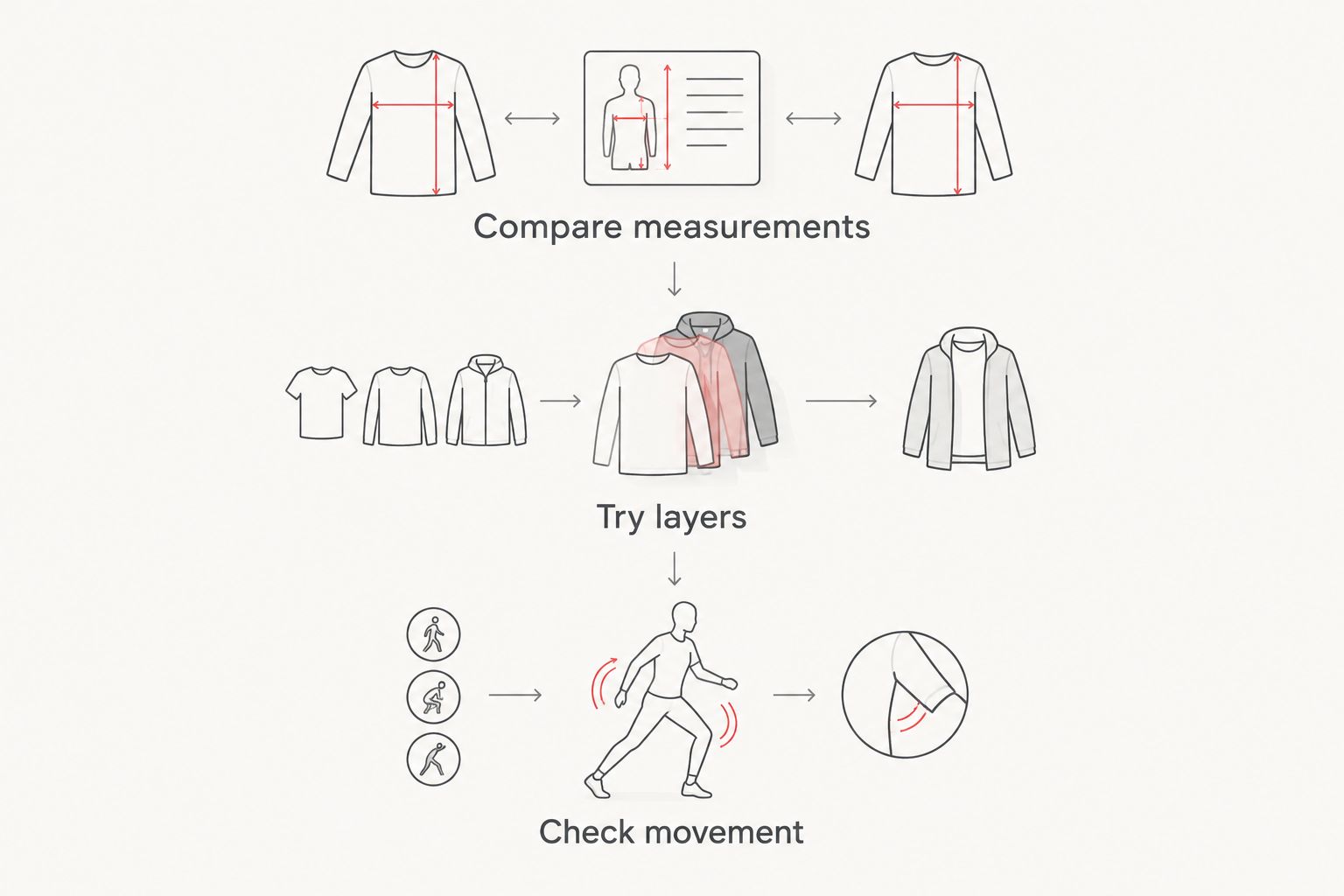
A dropped shoulder is not automatically a fault, and a closer shoulder seam is not automatically better. Judge whether the garment's intended shape gives you comfortable movement without constant adjustment.
Read fabric and care information together
Cotton content alone does not establish how a hoodie will feel or perform. Fabric construction, finish and garment design also matter. Likewise, the word recycled describes a material attribute, not the whole garment's environmental record.
Read the full composition rather than stopping at the first fibre named. If the description makes an organic or certified-material claim, look for product-specific information identifying what that claim covers.
Care requirements belong in the buying decision. If the stated drying method does not fit your home or routine, choose a garment whose instructions you can follow instead of planning to ignore the label.
After purchase, inspect small seam failures before they become larger problems. Follow the garment's washing, drying and ironing instructions; a universal hoodie-care rule cannot account for every fabric, trim or finish.
Separate product evidence from brand values
For a 2026 purchase, ask what each statement actually proves. A fibre-composition label describes materials. A production-location statement identifies a location. Neither, by itself, answers every question about working conditions or environmental impact.
DO WE states that 10% of each purchase goes to social causes. That is a specific giving commitment. It should sit alongside your assessment of clothing quality, not replace it or become an unsupported claim about emissions, water use or garment lifespan.
Use the same discipline for any brand. Look for an explanation tied to the item you are considering, and do not turn a broad values statement into a product specification.
Responsible buying starts with a useful garment and claims you can distinguish from one another. You do not need an impressive-sounding description; you need enough clear information to make a decision.
How the options are ranked
The everyday pullover takes the default slot for its straightforward role as a daily layer. The full-zip hoodie, oversized hoodie and secondhand route each answer a different need: adjustable coverage, extra room and reuse.
This 2026 guide prioritises fit, fabric information, comfort, construction, care and evidence. It does not award an environmental score to a silhouette or claim that an untested garment outlasts another.
Which sustainable hoodie should you choose?
Start with an everyday pullover unless you have a clear reason to choose another shape. Select a full-zip hoodie if front-opening coverage matters, or an oversized hoodie if you deliberately want more room.
Consider secondhand alongside those shapes, not only after them. A secondhand pullover still needs the same fit checks; its purchase route does not remove the need to inspect its condition.
For a wardrobe built around DO WE clothing essentials, keep the decision practical: choose the hoodie that works with your T-shirts, feels comfortable in motion and has care requirements you can follow. Treat the brand story as supporting context.
FAQ
What's the best sustainable hoodie for women in 2026?
An everyday pullover is the best default shape when you want a straightforward daily layer. Choose the individual garment by fit, documented composition, construction, care instructions and specific supporting evidence.
Is a full-zip hoodie better than a pullover?
A full-zip hoodie is better for adjustable front coverage, while a pullover suits a simpler closed-front layer. Check a zipped hoodie both open and fastened before deciding.
Does a cotton hoodie count as sustainable?
Cotton content alone does not establish sustainability. Assess the garment's specific material claims, production information, construction and usefulness to you.
Should I size up for an oversized hoodie?
Do not size up automatically for an oversized hoodie. Compare garment measurements first, because an oversized cut already includes additional room.
Are secondhand hoodies a good choice?
Secondhand hoodies are a useful choice when their condition, fit and care requirements suit you. Inspect the cuffs, neckline, seams and labels rather than relying on the original brand name.
What should I check before washing a hoodie?
Check the garment's care label before washing a hoodie. Follow its washing and drying instructions rather than applying a generic rule to every fabric and finish.
What does DO WE's giving commitment mean?
DO WE states that 10% of each purchase goes to social causes. This supports the brand's social-giving position but does not establish a particular garment's fabric composition or environmental impact.
One last thing
Before your next hoodie purchase in 2026, write down what bothers you about the one you already own. A tight neckline, inconvenient fastening or awkward sleeve length is a more useful starting point than another broad sustainability slogan.
Solve that specific problem first. Then check the fabric, care instructions and evidence behind the claims.